The Easel

11th August 2026

‘An extremely rare perspective’ – Stuart Fallon on the photography of Sandra George

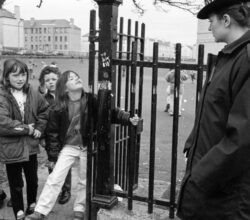
George is another photographer who never exhibited while alive. British born, she lived in Edinburgh, working as a community worker and photographer for local newspapers. After her death an archive of over 60,000 images was found in her garden shed. Those images depict “the personal and the local” – street protests, children at play, community scenes, self-portraits. They reflect on the agency that individuals have, the power of collective action and “the courage to speak truth to power”.

Which is the world’s most powerful art gallery?

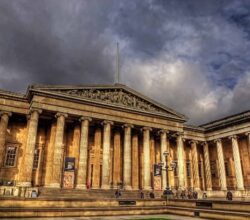
A not-entirely serious riff on a recent list of the 100 most-visited museums. Foot traffic is a necessary sign of “cultural influence” but far from sufficient. A superb collection – “wall to wall art bangers” – is also a must-have, plus the infrastructure to cope with the flow of visitors. Reputation maintenance demands that great works continue to be acquired. An historic collection, it seems, is wonderful but cold hard cash is almost as good. This (British) writer awards first place to – surprise – London’s National Gallery.

Portrait of a City review — a nostalgic stroll through a century of the American urban experience

A “nostalgic” exhibition that surveys a century of American photography. Stieglitz is generally credited with the first modernist photograph in 1907. From there America produced a roll call of great image makers, both men and women. Inevitably, much focus lands on that greatest of all melting pots, New York city. Some famous photographers, being recent immigrants, could empathise with their subjects “energy and appetite for change that is almost tangible”. Says one writer,  “exhilarating”.

Art Auctions

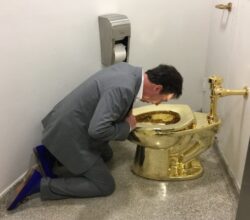
Spectacularly cynical take on a New York auction of “rich-guy art” that bores the writer “catatonic”. Many attendees “had brought their dogs—the better to help them imagine the art hanging in their living rooms, I suppose.” Once the sale starts “nothing can topple the awesome power of English accents.” The writer focuses on “a fully functioning, eighteen-karat gold toilet” by Cattelan. It sells for exactly the value of the metal it contained, nothing more. “It was, for once, an honest sale.”

When Art is Art: A Discursive Theory

Dipping a toe into the theory of art. No object is inherently art (!). Rather, art is defined by what a curator intends an object to do, namely contribute to a ”web of discourse”. Thus, sometimes an object will be art and sometimes not.   Is this a practical view? What if an object never provokes discourse, despite what a curator may wish? Aren’t we returning to exactly the point theoreticians wish to avoid, namely that qualities of an object do matter. Some objects are better at being art than others.

David Geffen Galleries

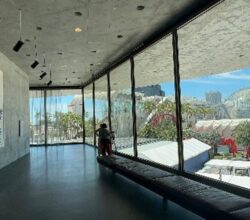
A renowned former art gallery director assesses LACMA’s dramatic building. A new building was sorely needed, and its exterior has “undeniable Brutalist power”. High internal natural light levels and raw concrete walls limit what art can be placed where.  “Shockingly”, the building allows barely 1% of the collection to be shown. Is the building just following the current popularity of “mixed-use lifestyle centres”? Pleasure is at the core of a museum experience but “art is [hopefully] not forgotten in the process”.

4th August 2026

Betye Saar, influential assemblage artist who ‘liberated’ Aunt Jemima, dies at 99

Saar leapt into fine art on seeing an exhibition of assemblages by Joseph Cornell. Soon enough she was scouring garage sales for objects with “a certain energy” that she could use in her shoe box sized assemblages. Often, they addressed political themes, most famously those where she included (and ridiculed) Black mammy figures that represented “Black female servitude”. Said she,” I like to think I recycled those images from negative to positive”. Images of some key works are here.

A rare and sublime collection of Shimizu Uichi’s work is presented on his centenary

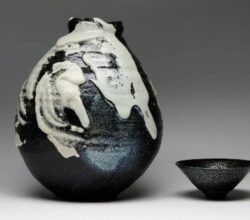
Shimizu, a Japanese ceramicist and Living National Treasure, was a “supreme technician” of glaze chemistry. Iron-rich glazes behave unpredictably when fired. The finest examples are miracles of artist and kiln and have a tradition separate from general ceramics. Unlike the wabi-sabi aesthetic of rustic Japanese ceramics, Shimizu’s pursued a modern style of great restraint where the glaze was his primary interest. But, it seems, he was not after perfection. If a piece is perfect, it “can lose its sense of life”.

The Many Lives of Frederic Edwin Church

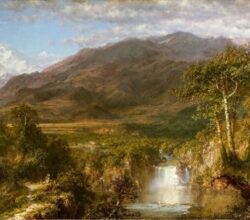
Church was America’s first art star, a virtuoso of the Hudson River School of landscape painters. His reputation rested partly on landscapes painted in remote places like the Andes which carried “intimations of the sublime”. More memorably, though, he painted America, even as it struggled to shake off its “colonial origins”. His work told stories about parts of America many had never seen. Says his biographer, Church was “not just a great painter of America — he’s a great American painter”.

The Summer Belongs to Joel Meyerowitz

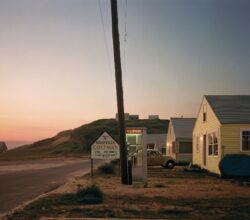
Meyerowitz switched to full-time photography in 1962 and spent about a decade working on the streets of New York. In 1972 he took a break from the city and, armed with an old large format camera, spent a summer in Cape Cod. With its “luminous” colour images of late afternoon and twilight the resulting book, Cape Light, is regarded as a classic work of colour photography. It has been re-issued to mark 50 years since its publication.

No cherry blossom here — women show a different side of Japan

Japan’s most famous photographer are all men. Female photographers have had to battle for attention. Their work, the subject of a large show, is ”grittily different from the cherry blossom dreams”. Some unflattering male behaviours are recorded but there is little evidence of a consistent “female” style. Says the curator, highlighting these artists makes “the history of photography more truthful. … they also expand our understanding of Japan itself.”

How art invented humanity

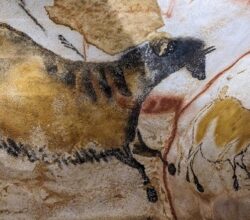
An interesting take on the topic ‘what is art?’. One type of art is represented by drawings of observable things – like bison on the cave walls of Lascaux. Only after millennia of expressing themselves through symbols and figures, did detailed human images emerge. This signalled another kind of art, the “exploration of those borderlands where the human ends and something else begins. Art invented humanity by giving humans access to the process through which it [brought] forth a world.”

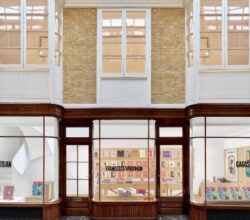
Gagosian exits locations in Basel and London’s Burlington Arcade

After the mid-year art auctions, some market observers suggested a rebound in confidence following several years of subdued results. Others are less sure, though, pointing to large “estate” sales that had boosted turnover. Now, Gagosian has announced it is closing two of its galleries, joining two other large galleries which have also recently trimmed their real estate. Some will see this as confirmation that the boom times are gone, feeding anxieties that younger collectors just aren’t into fine art.